
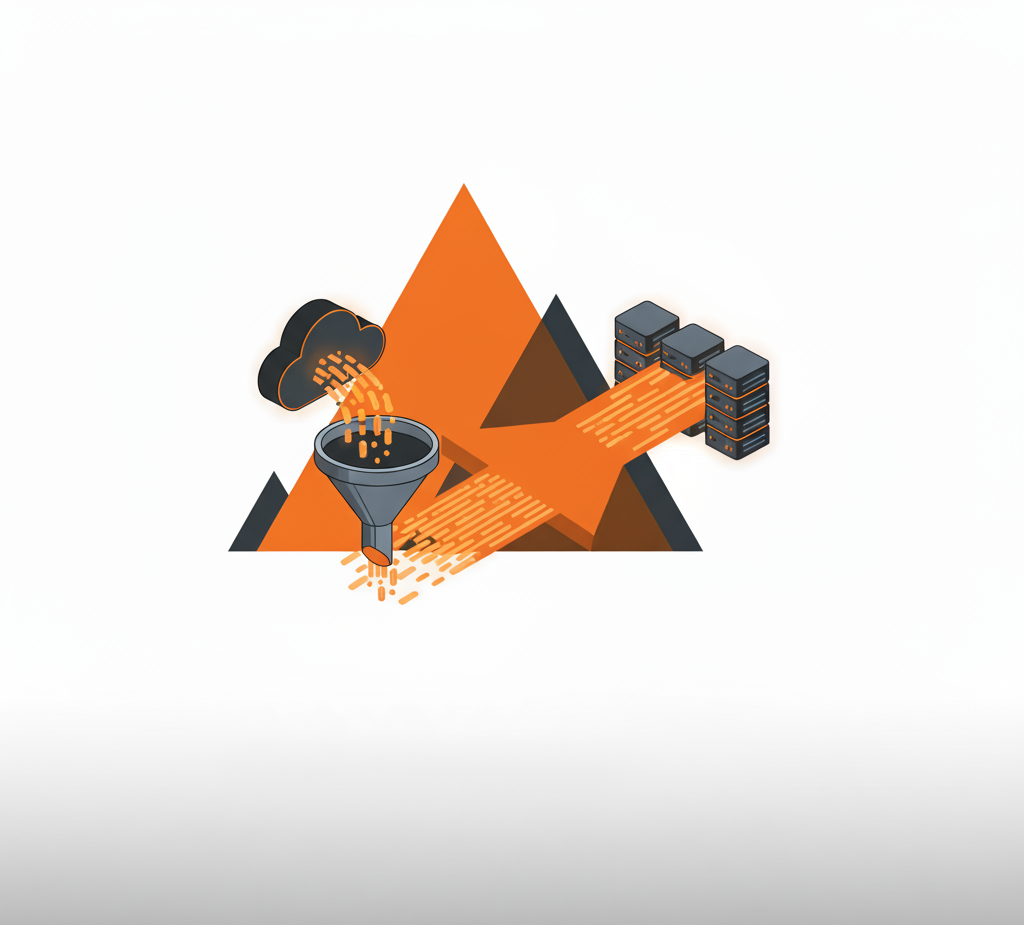
In the fast-evolving world of big data, enterprises are racing to embrace real-time data processing to stay ahead. GoTerra, a dynamic Southeast Asian tech giant, embarked on a bold journey to migrate its high-volume data pipelines from Google BigQuery to MaxCompute. This article, the eighth in our series, dives into the game-changing role of MaxCompute Streaming Insert in tackling real-time data ingestion challenges. From its robust architecture to its business impact, we’ll explore how this solution enabled GoTerra to achieve seamless scalability and performance, all while overcoming complex migration hurdles. 🔍
🏗️ 1. Inside MaxCompute Streaming Insert: A Powerhouse Architecture
MaxCompute Streaming Insert is a high-performance solution designed for real-time, high-throughput data ingestion. Whether it’s handling massive log streams, user behavior tracking, or IoT data uploads, this tool delivers stability, scalability, and simplicity to meet modern data demands. Let’s break down its core features:
✨ Key Features of MaxCompute Streaming Insert
Instant Data Visibility 📊
Unlike traditional batch processing, where data waits for commits, MaxCompute Streaming Insert makes newly written data immediately queryable. This ensures real-time insights for downstream applications, slashing data latency.
Scalable Write Performance ⚡
Using a distributed client write model, it dynamically adjusts concurrency based on data volume. This elasticity ensures consistent performance during traffic spikes or sustained high loads.
Fragmentation-Free Storage 🗄️
Frequent small writes can fragment storage, slowing queries. MaxCompute counters this by using a row-store format, minimizing fragmentation and optimizing storage efficiency.
Background Compaction for Speed 🛠️
Automated compaction optimizes table structures in the background, boosting query performance and ensuring long-term scalability for streaming data workloads.
⚙️ 2. Overcoming Migration Challenges with Smart Optimizations
GoTerra’s migration to MaxCompute wasn’t without hurdles. From handling complex data structures to ensuring system stability, the team faced significant challenges. Here’s how MaxCompute Streaming Insert turned obstacles into opportunities:
🧩 2.1 Mastering Nested Data Types
GoTerra’s BigQuery setup relied heavily on nested data types like ARRAY and RECORD to model intricate business objects. Migrating these to MaxCompute revealed performance bottlenecks in processing deeply nested structures.
Challenges:
- Early MaxCompute versions struggled with parsing and serializing nested types efficiently.
- Client SDKs faced performance limitations with complex data.
Solutions 💡:
- The MaxCompute team overhauled nested type processing logic for better efficiency.
- SDK updates introduced performance-optimized APIs for complex structures.
Impact: MaxCompute now supports up to 50 levels of nesting—far surpassing BigQuery’s 15-level limit empowering GoTerra to handle sophisticated data models effortlessly.
🔄 2.2 Seamless Schema Evolution
Schema changes, like adding fields or modifying types, are common in dynamic applications. GoTerra needed a system that could detect and adapt to schema changes without manual intervention or downtime.
Implementation:
- Enhanced the data tunnel service to monitor and broadcast schema change events.
- Integrated a schema change notification callback into the SDK.
- Enabled real-time schema updates via data request responses.
- Added storage-layer checks to ensure schema compatibility.
Results 🎉:
GoTerra’s operational data store (ODS) layer now enjoys automated schema updates, reducing operational overhead and minimizing risks during upgrades.
🛡️ 2.3 Boosting Stability and Performance
Early in the migration, MaxCompute Streaming Insert faced stability issues, including request failures and fluctuating latency, which tested GoTerra’s trust in the platform.
Challenges:
- Partial failures during high-concurrency writes to partitioned tables.
- Data backlogs caused by storage I/O fluctuations or metadata latency.
- Load balancing issues creating performance hot spots.
Optimizations:
- Introduced exponential backoff and resumable uploads for robust retries.
- Prioritized write channels with QoS-based scheduling for critical data.
- Optimized background compaction based on data volume and time windows.
- Added comprehensive monitoring and alerting for real-time insights.
Outcomes 📈:
MaxCompute matched BigQuery’s performance, achieving:
- 99.9%+ request success rate at the minute level.
- P99 latency under 1 second, meeting stringent real-time requirements.
💼 3. Business Impact and Future Horizons
MaxCompute Streaming Insert became the cornerstone of GoTerra’s migration, replacing BigQuery’s streaming solution and delivering superior performance. Here’s how it transformed their operations:
🎯 Key Business Benefits
Simplified Data Architecture 🏛️
By centralizing ODS layer ingestion through MaxCompute Streaming Insert, GoTerra streamlined its data pipelines, reducing complexity and management overhead.
Unmatched Performance and Reliability 🚀
Handling 60 TB of daily data ingestion, MaxCompute ensures business continuity with high throughput and rock-solid stability.
Cost-Efficient Operations 💸
Automated schema evolution eliminates manual updates, slashing operational and maintenance costs.
🔮 What’s Next?
MaxCompute Streaming Insert is poised for further innovation, with plans for:
- Exactly-once semantics to guarantee precise data processing.
- Dynamic partitioning to simplify client-side development and enhance flexibility.
🏁 A New Era of Real-Time Data Processing
MaxCompute Streaming Insert has proven to be a game-changer for GoTerra, enabling a smooth transition from BigQuery while setting a new standard for real-time data ingestion. Its robust architecture, innovative optimizations, and scalability make it a cornerstone for enterprises embracing data lakehouse solutions. As MaxCompute continues to evolve, it’s set to redefine real-time data processing, empowering businesses to harness the full potential of their data. 🌟
Ready to explore MaxCompute for your data needs? Check out Alibaba Cloud’s MaxCompute documentation for more details!
